Call for Papers
Background
Convolutional Neural Networks (CNNs) have revolutionized the field of deep learning, particularly in image recognition, natural language processing, and various other domains. Their ability to automatically extract hierarchical features from raw data, while reducing the need for manual feature engineering, has made them an essential tool in many applications. However, despite their success, CNNs face several limitations and challenges that hinder their performance in complex, real-world scenarios.
One major limitation of CNNs is their computational intensity, which demands large datasets and significant processing power, often requiring specialized hardware like GPUs. Additionally, CNNs are susceptible to overfitting when trained on smaller datasets or when not properly regularized. Their inability to effectively capture long-range dependencies or contextual relationships in certain types of data, such as sequential or time-series data, also presents a challenge.
Furthermore, CNNs are vulnerable to adversarial attacks, where slight perturbations to the input data can lead to misclassifications, highlighting their lack of robustness. Lastly, the interpretability of CNNs remains a significant issue, making it difficult to understand the decision-making process of these models. This symposium will explore the limitations and challenges of CNNs while also discussing promising research directions aimed at addressing these issues, such as novel architectures, regularization techniques, and robustness enhancements.
Goal/Rationale
The primary goal of this symposium is to provide participants with a comprehensive understanding of the limitations and challenges associated with Convolutional Neural Networks (CNNs). By the end of the session, attendees will gain insight into the key issues such as computational complexity, overfitting, limited generalization to new data, and vulnerability to adversarial attacks. Participants will also explore the difficulties in interpreting CNN models and how this impacts their adoption in critical applications. Another key goal is to highlight the current research trends and promising directions for improving CNN performance. This includes exploring new architectures, techniques for better regularization, strategies for improving robustness against adversarial attacks, and advancements in model interpretability. Through case studies and practical examples, the symposium will equip participants with the knowledge and tools needed to identify these challenges in their own work and explore innovative solutions to overcome them. Ultimately, the session aims to foster a deeper understanding of CNNs and encourage forward-thinking research in the field.
Scope and Information for Participants
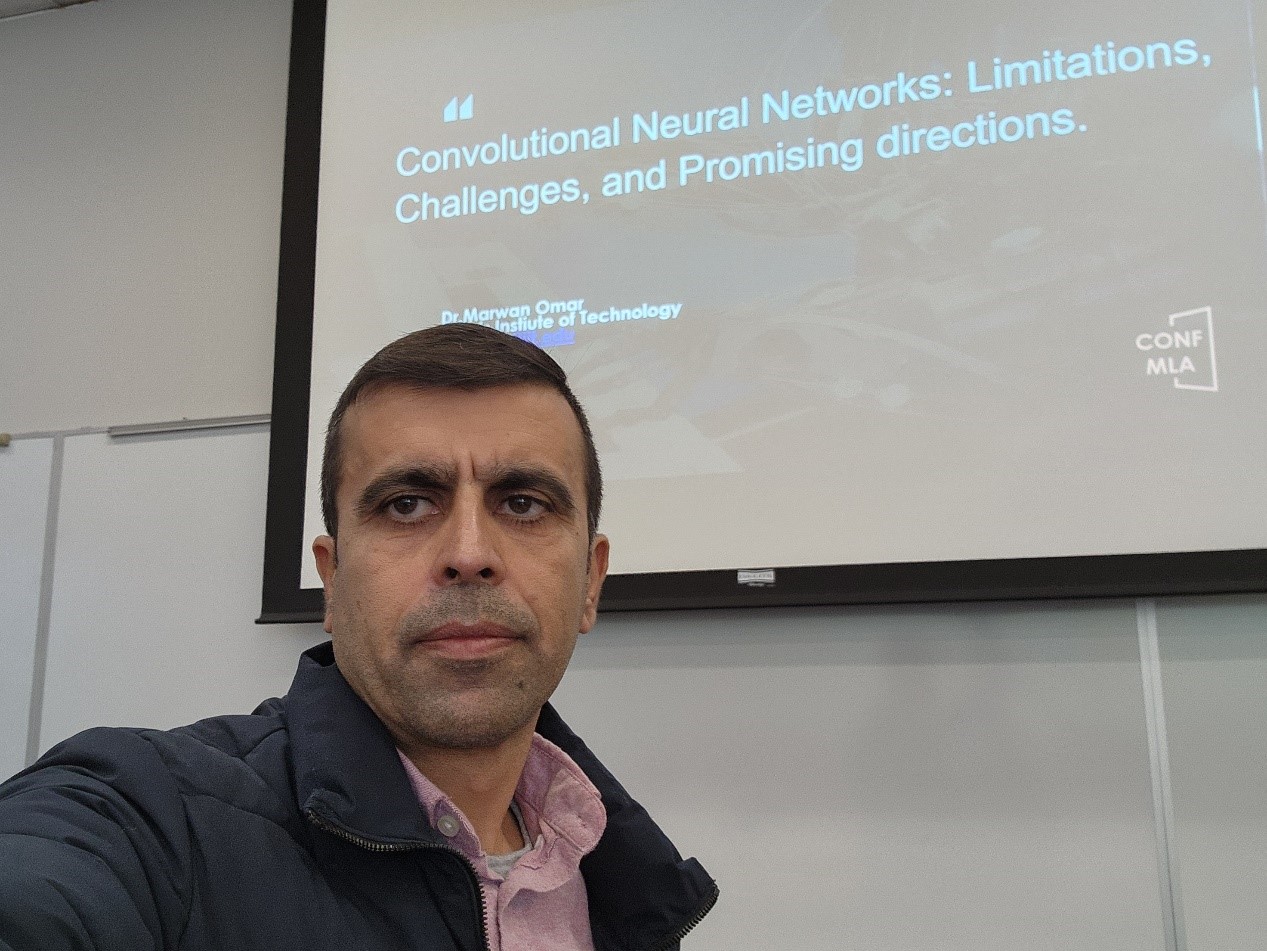
This symposium, titled Convolutional Neural Networks: Limitations, Challenges, and Promising Directions, will provide participants with a deep dive into the theoretical foundations, practical applications, and ongoing challenges surrounding CNNs. The scope of the symposium includes an exploration of CNN architecture, key limitations such as computational complexity, overfitting, and vulnerability to adversarial attacks, and the current research aimed at addressing these issues. The session will also cover emerging directions in CNN development, such as novel network architectures, regularization methods, robustness improvements, and efforts toward greater model interpretability.
Participants will gain a solid understanding of the challenges faced by CNNs in real-world applications, with a focus on practical examples from various domains like image recognition, natural language processing, and time-series analysis. The symposium will emphasize both theoretical concepts and practical strategies for overcoming CNN limitations, preparing attendees to tackle similar challenges in their own projects.
The symposium is designed for researchers, practitioners, and students with a foundational understanding of deep learning and CNNs. Basic familiarity with machine learning frameworks such as TensorFlow or PyTorch is recommended but not mandatory. Through hands-on exercises, discussions, and case studies, participants will be encouraged to apply the concepts learned to their own areas of interest, fostering a collaborative environment for knowledge sharing and innovation.